Friday, March 5, 2010

Rio Bravo- 1959

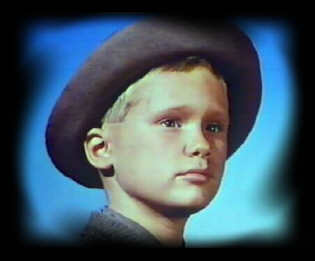
Directed by Howard Hawks, starring John Wayne as Sheriff John T. Chance, Dean Martin as Deputy Sheriff Dude, Ricky Nelson as Colorado and Angie Dickinson as Feathers.
(John Wayne, our hero and Feathers are main Heroine)


Rio Bravo was John Wayne's reaction to High Noon. In which the American people were Shown as cowardly and unwilling to help fight for their town's safety.


Mission: The sheriff of a small town in Texas must keep custody of a murderer whose brother, a powerful rancher, is trying to help him escape. He and his deputies, a drunk and an old cripple, must find a way to hold out against the rancher's hired guns until the marshal arrives.


Dreamy rat-packer Dean Martin, as the Dude.--->

Plot:

In the town of Rio Bravo, Texas, Dude (Dean Martin) the town drunk, enters a saloon wanting a drink. Joe Burdette, Brother to a local Wealthy Rancher Nathan Burdette, see's Dude eying the liquor in his hand. And proceeds to mock dude by tossing a silver dollar into a used spittoon. Just as Dude is about to go for the spittoon, John T. Chance (John Wayne) kicks the spittoon away, looking at Dude with pity and disgust. As Chance turns to face Joe Burdette, Dude grabs a small piece of lumber and hits Chance over the head, knocking him unconscious. Dude then starts toward Burdette, but two of his hired men grab Dude. Burdette proceeds to punch Dude, multiple time in the face and body area, while the two men hold him so he can't fight back. When suddenly a random man at the saloon grabs Burdette's arm so he can't punch Dude again. Burdette draws his pistol and quickly shoots the bystander in the stomach. Burdette then leaves the saloon and heads for one across the street, thinking that no lawman is man enough to arrest him, and proceeds to buy a new drink, after murdering an unarmed man.

John T. Chance shortly enters the second saloon with his Winchester to arrest him for the murder of the bystander. But one of Burdette's men draws his revolver on him creating a stalemate. Dude enters the saloon behind two of Burdette's men and takes the revolver of the man standing in front of him, and proceeds to shoot the gun out of the hand of man aiming at Chance(John Wayne). Chance then smacks Burdette across the face with his rifle knocking him unconscious. He and dude then drag Burdette to jail.


Joe Burdette's brother, a powerful rancher, Nathan Burdette, hires a number of men to watch town in preparation to breaking Burdette out of jail. The only help Chance has are his deputies Dude and Stumpy , an old cripple with a silly voice and a shotgun.

While this is going on in town. A Wagon train enters town lead by a man by the name of Pat Wheeler, an old friend of Sheriff Chance, with a load of supplies from Fort Worth. Tensions are further strained by the presence of a young gunslinger hired by Wheeler to guard his wagons, Colorado (Ricky Nelson), and the arrival of a mysterious woman, Feathers, who quickly becomes romantically involved with Chance.


Best scene in the movie: the musical stylings of Dean Martin, Ricky Nelson and Stumpy.


Class Discussion/themes:

During our class discussion we came up with the majority of the western themes seen in this film.

Themes:

The main theme of the movie was that every character in the film was willing to fight, where as in High Noon no member of the town was willing to fight.

This though has a possibility of being because of the difference of the two towns in Rio Bravo and Highnoon. Where Rio Bravo is a town with more then one saloon and a higher value for a man's morals than his religion.

Race, class and gender all come in this film as well.

Race plays a very different dynamic then in the film we saw John Wayne in (The Searchers), where in this film he seems to bridge a racial gap with his Latino-American friend, Carlos Robante.

<- Carlos Robante


Gender plays a significant role in the film also. With the relationship between John Wayne and Feathers, who although seems to be one of the stronger woman we have been presented with thus far, still relies heavily on the men around her. This though is not true for Consuela Robante, a Latino-American woman, who holds a large amount of power over her husband Carlos. Are class discussed weather or not this was racist jab at Latino culture, that Hawks might be trying to say that Latino men are weak because they can't control their woman, but that was left up to debate.

The final and most prevalent theme is the working man's hero, played by John Wayne, where yet again the bad guy (Nathan Burdette) is a rich man, who is defeated by an honest, hardworking American. And in addition to that the men hired by the are such great cowards that when five guys defeat all 40 of them, that the those remaining clear out of town by the end of the day.

Over all it seemed that the class enjoyed this film, and that John Wayne is still a badass.

Wednesday, March 3, 2010

THE SEARCHERS (1956) JOHN FORD


The mission of Ethan (John Wayne), is to search for his nieces who have been captured by Cherokee Indians. He also desires to kill as many Indians as possible.


We start out in Monument Valley in a home with three kids and a mother and a father. An outsider approaches the house, and this man happens to be Uncle Ethan, who has been in the war and is now finally returning. During his stay at his sisters house, a group of Comanche Indians comes and raids the house killing his family and capturing his two young nieces. Ethan is very upset by this, and his goal now is to find the group they are with and rescue them.

His family had adopted a boy named Martin, or Marty (Jeffrey Hunter), who is a 1/8th Cherokee. Marty was fortunate enough to be with Ethan at the time of the killing, and therefore the only other family member Ethan has. Together they travel across the United States in search of their beloved family members. On the way, they run into obstacles, see friends and encounter new people, as well as Indians. Ethan discovers on their journey, that Lucy was raped and killed, driving her fiancé to suicide, in the means of him charging the Indians on his own. After much traveling and talking to other groups of Comanche, Marty finds himself a wife, who eventually gets killed, and after five years they finally catch up with Scar. Once they get to Scar, it seems to Ethan and Marty that Debbie will forever be a Comanche. Once they discover this, Ethan loses all hope and wants to return home; Marty, however, will not give up and goes after Debbie, and as it turns out after once rejecting to leave, she complies and goes home with a steady heart.


In this movie, it is the first time we see the opening shot from the inside looking out at the vast Monument Valley. A shot that keeps the viewer inside, with a sense of claustrophobia and protection. John Wayne’s character, Ethan, lifts up his niece, Debbie, and this is an important moment showing the connection of family, and the everlasting love. We see this scene again, at the end of the movie after Ethan and Marty’s tedious journey. Ethan lifts up the older Debbie (Natalie Wood) and at this moment we see that Ethan wanted Debbie to come back the whole time even though he was convinced that she was full Comanche. This the first time we see racial tension with in a family. Although they are not blood related, Marty and Ethan, Marty is still family to Ethan. Marty is 1/8th Cherokee Indian, and since they are from the south, and the movie was made in the 1960’s, a time where racism is still a big debate, the tensions are even higher than what could normally be expected between family members. In this movie we also see more violence. Not only fights between races, but fights between men and violence towards women. Wars between races have been seen in the past western movies, yet fights between two men have now become ritualized and must follow a pattern. In The Searchers we see a fight that has guidelines such as, no biting and no kicking, as well as a ritual of walking in circles a few times before throwing the first punch. In movies to come, fighting might become more like this and have an even more ritualistic feel to it. In one scene we also see Marty kick his Indian wife down a hill. We have not seen this much aggression in violence towards women. The Searchers was a hit when it was released into theaters and some believe this movie is one of the best western movies of all time. John Ford and John Wayne, we tip our cowboy hats to you.


Monday, February 22, 2010

Shane (1953)


I could say I enjoyed this movie, but then I’d be lying… Between all the Shanes and the Bang Bangs, during the middle of the movie the kid was right, I did want to shoot something... Myself. And I think the whole class would agree with me, well actually Millie just wanted to shoot little Joey. This definitely was not a favorite movie of ours, but it was made and our class watched it. So, here's a little bit about the movie Shane...

Shane’s mission is to settle down and find a place to stay. However, there becomes a settler conflict, which forces Shane to take action.

A loner, also known as Shane, comes across a nice family, the Starretts. The Starretts are homesteaders who want to farm the land. A three-day ride away from them are the ranchers. The Ryker brothers, also known as the ranchers, try to intimidate the homesteaders hoping they will leave what they believe to be their land. They do not want any farmers around, they just want to raise their cattle. However, the homesteaders are strong and won’t give in. Joe Starrett wants to build a life for his family, Marion and his son Joey on this land. Shane, who happens to be a gunslinger, befriends this family. Shane wants to settle down with the homesteaders however instead he gets into the middle of this tension between the homesteaders and the ranchers. A gunman killed one of the homesteaders, thus the tension kept increasing. So, Joe Starrett felt he had to do something, however instead Shane takes over and rides into town where he kills the Rykers and the gunman. Shane is a hero as he makes this western town safe again for all. He says goodbye to little Joey who looks up to Shane and then rides of into the distance…


Many critics believe that Shane is a masterpiece because of its simplicity and pure American style. The movie takes on stereotypes and embraces them. The characters’ appearances tell the audience exactly who they are. There is nothing shocking about the film, it is just straight to the point and takes on the truth. The film, Shane, sums of the West, such as individualism, initiative, persistence, lawlessness, violence and also racism. The entire movie encapsulates the West, which makes it such a well-known film in the Western genre.


Our class discussion consisted of bashing the entire movie, Shane himself and the little boy, Joey. Nothing really came out of our discussion as many of us, no wait, ALL of us did not like the movie. We discussed whether Shane is American or not. Many of us argued that he was not American and some argued that he was American. In my opinion, he takes on many traits of an American, thus making him American. Either way I think we could all agree on...


"Shane ... Shane ... Come Back!" -Joey

No Shane. Please don’t come back…


Friday, February 12, 2010

High Noon (1953)


High Noon (1953)

Although High Noon didn't have a smashing success at the box office when it was released in July 1952, it made a profound effect on westerns for years to come. In fact, John Wayne hated this movie so much that his next movie was a direct response to High Noon.

Mission: A town marshall goes looking for people to act as deputies when a murderer he sent to jail returns, seeking to kill him.

Plot: The town marshall of Hadleyville, Will Kane (Gary Cooper), has just gotten married to a Quaker named Amy (future Princess of Monaco Grace Kelly). He's about to leave town for good when he learns that there are three guys waiting at the train station for the noon train supposedly carrying Frank Miller, a murderer Kane convicted years ago and was to be hung until he was sentenced to jail and released. Once Frank Miller arrives, the three of them will come into town with the intent of killing Kane. The townspeople insist that he leave town with his wife, which Kane does, but he eventually turns around and comes back to town to fight. This upsets his wife, sending her to the train station to get a ticket to St. Louis. However, feeling uncomfortable with the three bad guys waiting for Miller, she decides to wait in the town's hotel.

Up until noon, Kane goes to the town's saloon, church, and even a couple of friends, who all refuse to help Kane fight the men for various reasons. Even his deputy, Harvey Pell, refuses to help him, and even fights Kane at one point in the film. Kane is eventually left to his own devices to fight the men.

Meanwhile, Helen Ramirez is fed up with her husband, deputy Harvey Pell, and prepares to leave town. Amy ends up meeting her, and the two of them proceed to the train station for the noon train.

At noon, the train with Miller arrives, while Ramirez and Amy board the train. The four men then come into town prepared to kill Kane. Kane successfully kills two of the men, but gets his arm wounded in the process. Upon hearing gunfire, Amy runs off the train, only to hide in the town. She ends up finding a gun, and kills the third gunmen in the back. However, Miller finds her and takes her hostage so that he can get to Kane. But before Kane comes and surrenders, Amy claws Miller's face, who as a result releases her. Kane then quickly shoots and kills Miller. Kane and his wife then leave the town for good.


Significance: Arguably one of the best film westerns, it was highly controversial when it was released. The film was seen as a response to
McCarthyism, which was particularly rampant at the time of the movie. High Noon is also significant for its real-time storytelling, as the film starts at 10:35 and goes til noon when the fight begins.
In addition, this film was a major favorite of President Ronald Reagan, Bill Clinton, and even George W. Bush.


Discussion: We talked about the different themes of the film, particularly the actions of Ramirez, who seems to own pretty much everything in the town, such as the saloon, and Amy, who forgets her Quaker beliefs and ends up killing a man and helps her husband by scratching Miller, making him an easy target for her husband. We also talked about the town's refusal to help Kane, and also how they are left without any marshals or any kind of police once Kane leaves. We also mentioned the appeal of Kane, and especially considering his age and how a lot of westerns we have watched have people who are a lot younger than Kane, In addition, we also touched on Hollywood's response to "McCarthyism" of the movie since none of the town's residents agreed to help Kane.


Ryan Himel

Tuesday, February 9, 2010

Calamity Jane


Marthy Jane Cannary or as we know her: Calamity Jane was born on May 1st 1852 in Missouri. She was the oldest of six children and was known for her love of the outdoors at an early age. In 1862 Marthy and her family moved to Virginia City, Nevada. At this point in time Marthy’s mother had passed away and her father was depending on her to help run the house.

Except one day something terrible happened…Indians had an uprising and Calamity Jane was separated from her family. Jane was forced to carry on alone at the age of ten, to get by and seem strong she dressed in men’s clothing and always carried a rifle with her. Calamity Jane’s reputation slowly but surely grew she was known for her great shot with a rifle, asking men to dance, and for not being afraid of anyone.

In her life Calamity Jane was a prostitute, frontiersmen, and a professional scout. She was known for being a raging alcoholic and when she ran out of money she would trade sex for money and then go buy more alcohol. When Jane was sober she would partake in killing Indians. This made Jane both famous for killing Indians and infamous for being a prostitute. This made people fear Calamity Jane and her way of life, until she died on August 1st 1903.

The way Marthy Cannary got her nickname isn’t fully known however the general story is that:

"One day Captain Egan was surrounded by a large band. They were fighting desperately for their lives, but were being steadily, but surely slaughtered. Captain Egan was wounded and had fallen off his horse.

"In the midst of the fighting, it is said, the woman rode into the very center of the trouble, dismounted, lifted the captain in front of her on her saddle, and dashed out. They got through untouched, but every other man in the gallant company was slaughtered.

"When he recovered, Captain Egan laughingly spoke of Miss Canary as 'Calamity Jane,' and the name has clung to her ever since; so that while thousands have heard of her, very few have ever heard her real name.”


Information found at:


The Livingstone Enterprise, August 8, 1903, "Calamity is Dead", as quoted in "Calamity's in Town," p.32, by Bill and Doris Whithorn, 510 S. 8th St., Livingston, MT 59047.

http://www.cowgirls.com/dream/cowgals/calamity.htm

http://en.wikipedia.org/wiki/Calamity_Jane

American Quarter Horse: The Horse of the Frontier


The American Quarter Horse is a horse dating back to the 1600’s. At this time in America, these horses were mainly of Spanish origin. However, in the late 1880’s cowboys rode quarter horses because they were sturdy, willing, and quick. Their small heads and large muscled bodies were ideal for plowing, riding, and herding cattle. The quarter horse is a cross between Spanish horses, mustangs, and more domesticated breeds in Native American tribes. The quarter horse was irreplaceable even after cars and automobiles were invented because of their keen senses and quick reflexes. They were unofficially one of greater reasons why rodeos were started. Cowboys would have little competitions to see whose horse was better over a quarter mile distance. Over the years this racing has become a great sport. This being said, cattle ranches don’t use any other breed of horse to this day when it comes to reining, cattle herding, and wrangling.

Beef

Quick History: Beef were originally used for meat and labor. Horses later replaced beef for labor. One of the earliest breeds of beef imported was the Shorthorn, which was imported in 1783. They are known for average maturity rate and are easily recognizable due to their red and white roan color.
(Shorthorn Bull)

In 1817, Herefords were imported. They were one of the most popular breeds next to the Angus, which were imported in 1873. Both breeds were known for their early maturity rate. Herefords are generally red with white faces, chest and leg markings. Angus are all black.

(Hereford Bull/Angus Bull)


Another one of the most popular cattle come from the state that produces the most beef. Texas Longhorns are not used for beef anymore but are more of a symbol for the American West.
(Longhorn Bull)


Today most of the cattle used for USDA beef are the Hereford, Angus, and Shorthorn breeds. Most cattle that are shown though, are Crossbreds because they produce more flavorful meat. Other breeds have since been imported, such as the Charolais from France, and there are more than 900 registered breeds of beef in the world today.
(Charolais Bull)